A barn conversion is all about character: exposed beams, stone or brick, big open volumes and rooflines you'd never get in a new build. The internal doors need to live up to that. The right ones look like they belong: solid timber, honest traditional styles and, more often than not, made to a size the original building never planned for. Here's how to choose internal doors that suit a converted barn, from material and style through to glazing, sizing and the external doors that finish the job.
What makes a door right for a barn conversion?
Four things decide it: the material, the style, the finish and the fit.
| What to look at | What suits a barn conversion |
|---|---|
| Material | Solid timber: oak for character and durability, or pine for a lighter, budget-friendly door you can finish yourself. |
| Style | Honest, traditional builds: ledged, ledged and braced, and bead & butt doors with a planked face. |
| Finish | Natural finishes that let the grain show, rather than a flat paint that hides it. |
| Size | Barns rarely have standard openings, so made-to-measure sizing is often the difference between a proper fit and a compromise. |
Ledged, braced and bead & butt: the classic barn door
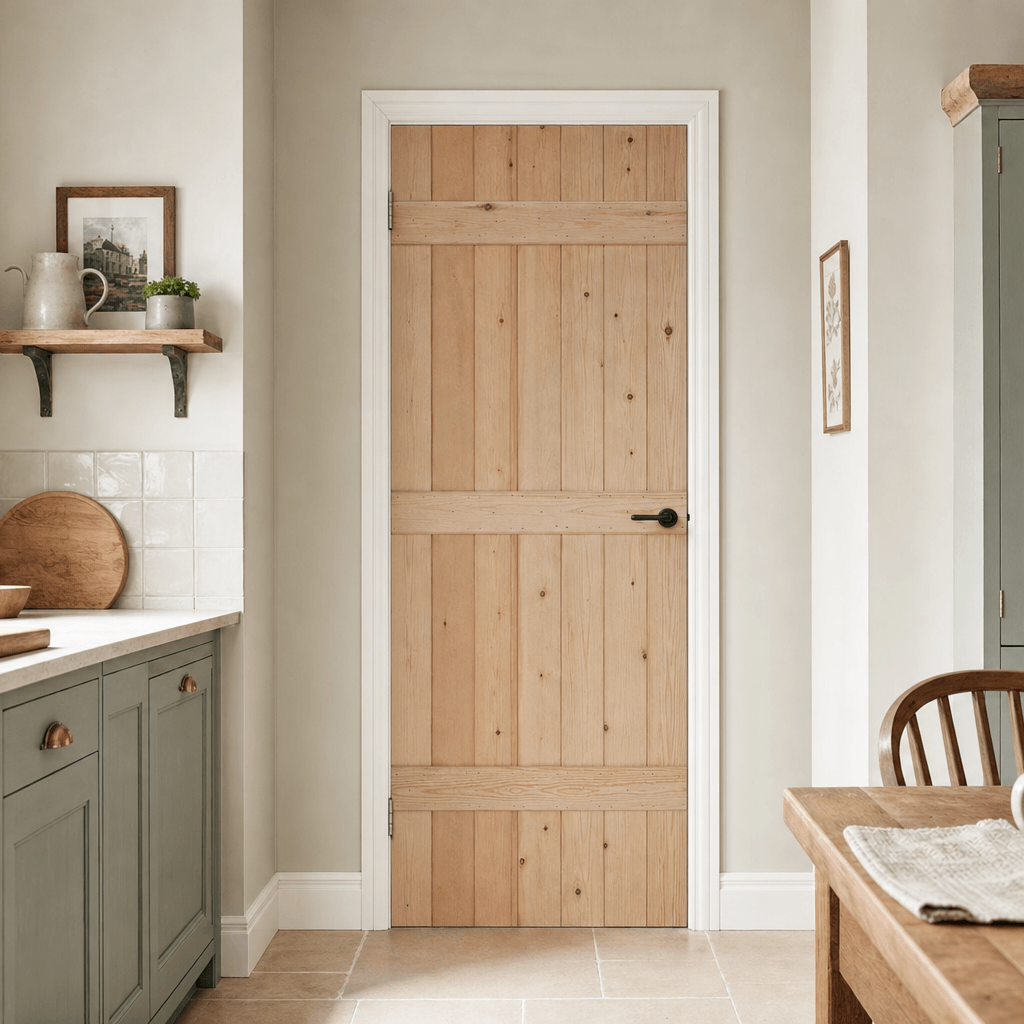
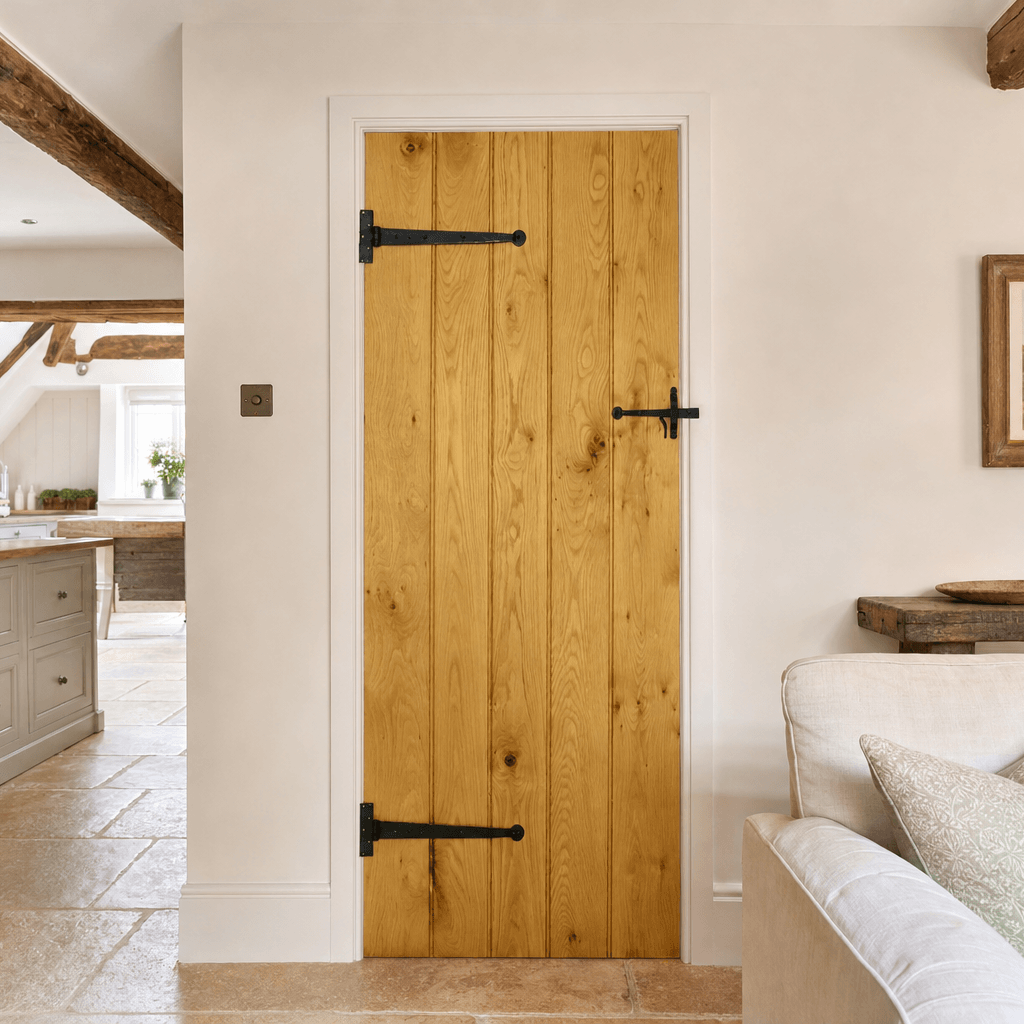
The doors that suit a converted barn best are the traditional planked styles. A ledged door is built from vertical boards held together by horizontal rails, the ledges, across the back. Add diagonal braces and you have a ledged and braced door, stiffer and even more in keeping with a rural building. Bead & butt doors have a neat moulded joint between the boards for a slightly more finished face. All of them nod to the way the building was originally put together, which is why they sit so naturally in a barn.
Solid oak or pine?
Both are solid timber; the choice comes down to look, upkeep and budget.
Oak has the character a barn conversion calls for, with a warm, deep grain that ages beautifully and stands up to years of use. It needs little more than the odd re-oil to keep it right. Our solid oak doors are the natural match if you want the doors to feel as substantial as the building around them. Pine is lighter and more affordable, and it takes paint or a natural oil well if you'd rather finish it to your own taste. For the wider oak range beyond the barn styles, browse our oak internal doors.
Let the light through
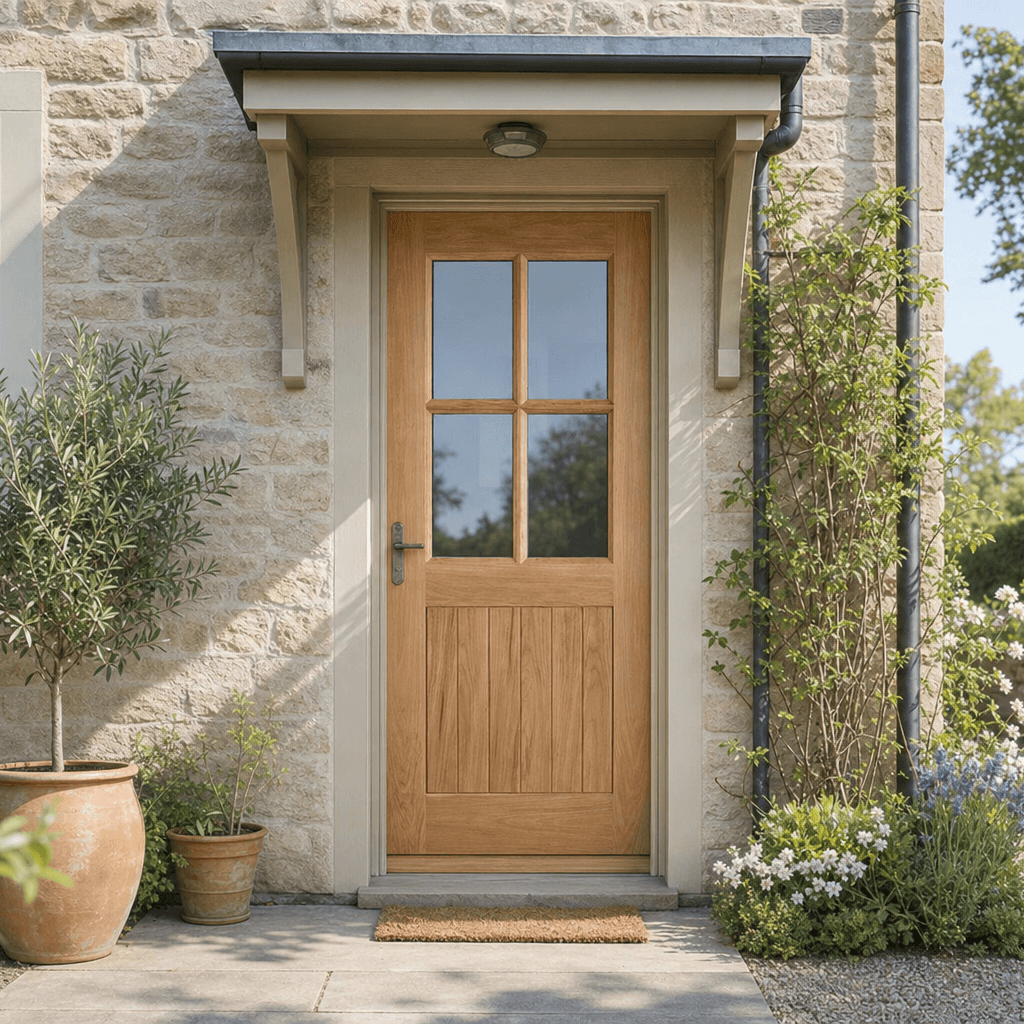
Barn conversions can be dark in the middle, a long way from the nearest window. A glazed ledged door keeps the rustic look but borrows light from a brighter room, handy for a hallway, a boot room or a snug off an open-plan space. Clear glazing gives the most light; obscured glass keeps the daylight while adding privacy. Several of our barn and ledged doors come in glazed versions for exactly this reason.
Getting the size right
This is where barn conversions catch people out. Original openings are rarely a standard height or width, and forcing a stock door into a non-standard frame never quite looks right. Measure every opening, as they often vary from room to room in the same building, and where a standard size won't do, a made-to-measure door earns its place. It's the single biggest factor in whether the doors look original or bolted on.
Don't forget the external doors
The internal doors set the tone inside, but a barn conversion's exterior deserves the same thought, and it's where much of the building's character is on show. A stable door is a natural fit for a barn or a boot-room entrance, letting you open the top half for air while the bottom stays shut. For the main entrance, our oak external doors carry the same timber character outside as your barn doors do within. Where you want to flood a converted space with daylight, glazed external doors open the building up to the view. One thing to be clear on: an internal door won't survive outside, so always use a door built for external use where the weather can reach it.
Frequently asked questions
What internal doors suit a barn conversion?
Solid timber doors in traditional planked styles suit a barn conversion best: ledged, ledged and braced, and bead & butt. Oak gives the most character and durability; pine is a lighter, more affordable option you can finish yourself.
Should I choose oak or pine for barn doors?
Both are solid timber. Oak has the deeper grain and longevity to match a barn's character and needs little more than the odd re-oil. Pine costs less and takes paint or oil well if you'd rather finish it yourself.
What is a ledged and braced door?
It's a traditional planked door: vertical boards held by horizontal ledges across the back, with diagonal braces added for extra rigidity. The style comes from the way rural buildings were originally made, which is why it suits a converted barn.
Do barn conversions need non-standard door sizes?
Often, yes. Barns were never built to standard door openings, so sizes vary from room to room. Measure each opening and use a made-to-measure door wherever a stock size won't fit cleanly.
Can I get glazed barn-style doors?
Yes. Many ledged and barn-style doors come in glazed versions, which keep the rustic look while borrowing light into darker parts of the conversion. Clear glass gives the most light; obscured glass adds privacy.
Get the material, style and sizing right and the doors will look like they were always part of the building. Browse our internal barn doors in oak and pine, and if you'd like a hand matching doors to your openings, our team is happy to help.
Related reads
| How have cottage door designs evolved? | The period styles that suit a character property. |
| Transforming a rustic holiday retreat with internal doors | Rustic interiors, from the doors up. |
| Can you use internal doors outside? | Why an internal door won't survive on an exterior opening. |